top of page

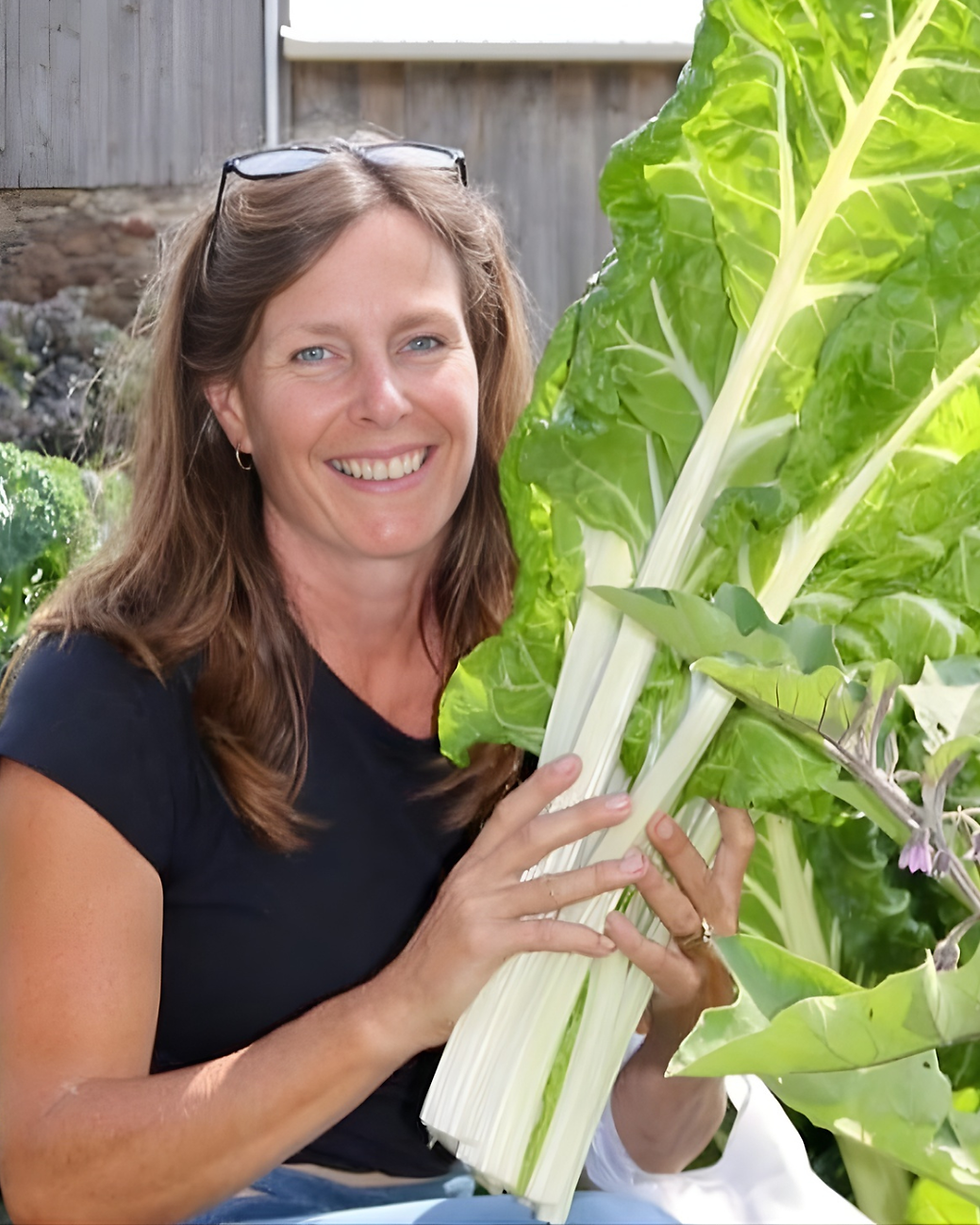
International Year of the Woman Farmer: Amy S.

  • 17 hours ago
  • 10 min read

Amy of Fresh Heads Farm Shoppe and Ontario Sustainable Agriculture


Who is Amy Spraggon...

Amy Spraggon is the owner and operator of Fresh Heads Farm. The work she does allows her to escape the alternative. She loves to grow her own food. Knowing where it comes from and what’s in it, and what it doesn’t contribute to, to get to her plate is powerful. It connects her to a community of people who do what most don’t: create for themselves - food, crafts, and that’s an amazing space to be in.


Business ownership teaches you a wide variety of skills (some are great and some are burdensome). Accounting, customer service, social media, website design, employee management, inventory procurement, advertising. Also resilience, quick thinking, confidence.


Amy has a business certificate from Seneca, and an honours degree in political science from York University. All of her education in farming has been entirely on the job. She started knowing nothing, and figured it out along the way. Five years in, it’s still a great journey.

She took a month or so somewhat off this winter and spent it learning the trumpet, and doing stained glass. Her mother saves monarch caterpillars in the summertime and they have been making panels for a small stained glass greenhouse to house them until release.


But farming is definitely also her passion. She has so many things she still wants to do - experiment with Dutch buckets, grow luffa, she just planted seabuckthorn and other berries she's never had before, the list goes on. 

What Does Your Identity as a Woman Farmer Mean to You?

These are loaded questions, every single one of them. In general, being a woman anything is just that little extra seasoning on the job, you know? It certainly presents more challenges. I'm frequently assumed to be the staff, for instance. But I think it feels a little counterculture to me to do what I do. It's a little against the grain, which really tickles me. The frustrations felt when you're overlooked or boxed in or basically just treated as a woman, part of me is a little satisfied when it happens. It's my disobedience. It's my contribution to the world, which I do for myself. But it's always that little reminder that I do this to be rebellious, and not just to demand, but to enact change. Plus I love being a woman among fellow women in this space. I think we see each other a little more. Don't get me wrong, we have lots of great people of all genders in our space, but the upside to womanhood is that you aren't scrutinized for bringing that feeling into your work: for caring, for being considerate. I mean, it's almost expected of you, which in one way is another box, but on the other hand, you get to bring those values into your space without any extra work to get there.


Do You Think the Farming or Agricultural Industry Is Designed to Favour Men, and Why or Why Not?

All industries favour men, I mean, particularly this industry, it's a very old industry, right? And given that it’s rooted in a lot of tradition, it's rooted in those traditional values as well, which is men do the work. I see it in my space. I work with my brother and now my partner, and I see how often they're more acknowledged, more listened to, praised. What I do find interesting about farming in the modern day is that for the most part, the other farmers I interact with every day are mostly other women. There's always men on the team, and often the men are in the figurehead positions, but it's the women who liaison and who organize, and they're the ones that I interact with the most. There's a lot of conclusions I want to make about that. Is it that this is the part of the job that's been deemed women's work, while the men are out in the field? Is it that the women do the jobs that other people don't want to do? Probably, but it could be a symptom of the industry changing. In general, the farming industry is aging out and dying, the next generation isn't looking to take up the mantle with as much enthusiasm anymore. Instead, I am interacting with more and more new farmers, first generation farmers. And these farmers are moving the industry towards more small, more community-oriented, more conscientious production, and these farms are often women involved.


Hm. Why do you think not a lot of people are getting into farming. You know, as people age out, there's not a lot of people coming into it. Why do you think that is?


You know, I was not born into a generational farm, so I can't speak to it. We are farmers. My parents were accountants, so, it wouldn't be my experience. My impression is that farming is an old industry that hasn't modernized very much, and it's a lot of work. I think younger generations watch their parents work well into their seniority, I would say, and do a lot of physical manual labour and a lot of outdoor labour. I think they look at it, and it doesn't appeal to them in a modern world where, for instance, the internet shows you how many other options there are. I think the younger generations are electing not to take up that task and not follow in those footsteps. But I think that we always need food, you know? These farms are maybe unfortunately not going to be able to carry on, but other things will pop up in its stead, and I think we are seeing more of that.


Why Is Farming Important to You?

‘Cause I need to eat. We need to eat. We need to produce food. It's such a silly answer, but it is very accurate. As much as our modern food system is currently producing food for us, it's beyond unsustainable. I mean, I think you could count on one hand, possibly two hands, how many of our major food industries are heavy-handed contributors to our environmental collapse and global social exploitation. It's a system that needs to change. So, why is farming important to me? I mean, my farm's important to me because this is my rebellion. This is my revolution. We need to innovate how we produce food and how we source not only our food, but all goods. The next evolution will be small scale regenerative farms that support their neighbourhood directly. And whose principles rest on feeding their community and promoting their local creators. I think it's the only way that we keep our planet going.

What Advice Would You Give a Younger Version of Yourself?

I saw this question and it stumped me. I could not answer it. I struggled so hard with it. I suspect when I'm 50, I'll be asking my future self to give me advice too.


So you will constantly be asking older versions of yourself to give advice to younger versions of yourself.


Yeah, every year. I've learned the importance of community and the value of caring. I've learned what I'm capable of. I've learned what I'm not capable of, and I just, I don't think I could explain any of it to my younger self. I think it's only through the experiences that I came to appreciate any of it. And, you know, maybe I shouldn't rob her of that.


What Advice Would You Give a Young Woman Who's Entering into the Agricultural Industry?

My first piece of advice is to build a network. Don't get caught up in whether you like this person personally and all of their values. That is such a modern luxury. Support your community and importantly, accept their support in return. And you'll find out that everyone is happy to participate in this exchange regardless of whether you like this person on an individual level. That would be my biggest piece of advice. My experience of womanhood in this sort of, what I call, an entrepreneurial space, even though I'm not a huge fan of the word, is constant concern for how I come off and how I should approach a situation. Constantly sort of breaking myself to show up for others and for the job. That's effective to a point, right? I think really we should be doing far less of that as women and spend more time figuring out what we want and how to get it. But building a network is going to be how you get there. You can't do it alone, in my opinion.


What Advice Do You Have for an Immigrant Woman Who Is Entering the Canadian Farm Industry?

I'm not an immigrant, and I can only imagine the added challenges that would present. I think my advice would be the same. You've made it this far. So now that you're here, don't be afraid to take up space and to make demands. Don't hesitate to ask for help and offer it where you can and see how much people start to do the same for you.


Mm. Nice. That's such good advice. When you articulated that, you basically articulated what it means to be human, and to be a caring, compassionate person. 


Yeah, it's one of those things that, like some kind of currency, we have to reserve or hold on to, but the more you give it, the more you get it back, and it happens every time.


What Do You Wish the Average Person Understood About What It Means to Be a Woman Involved in Agriculture and Farming?

It's an interesting question. I don't think the experience of womanhood is a singular one, even within one industry, so I can't speak to all the women in this space, even just within the York Farm Fresh board. What we all culturally have acknowledged in the past few years is that women tend to be doing far more work than just their job, right? They're probably managing their household and their children if they have them, probably their parents, their in-laws, possibly their partners, and they're the ones who carry the emotional burden of these relationships too. All the while they do the work behind the scenes that keeps the farm running. This is true of all industry, this is fairly universal, but farming is a famously demanding job and an old job that hasn't modernized much, as we've said. So you can only imagine the amount of work these women do every day.


There Was a Survey from Farm Management Canada That Found a Lot of Women Struggle to Identify Themselves as a Farmer. Why Do You Think This Is? And Do You Yourself Identify as a Farmer?

I thought this was so interesting. I can only speculate, but I am so intrigued. My brother and I, we're business partners. We are the farmers, but he takes on a lot of the processes that directly grow the food. He's doing the heavy manual labour. And I can only imagine that to be true for others as well. I think the men generally fall into the roles that use the heavy machinery, right? They're tilling the fields and driving the tractors, while the women do the other stuff. But I think what gets defined as farming in the public eye is a fairly narrow understanding of the job. It is those hands-on moments, you know, like holding the scythe and driving the oxen with a piece of straw in their mouths. And the rest of the work is sort of erased. I think women struggle to fit into this narrow definition of farming when they're the ones performing the unseen work. So that's my first theory, but I also wonder, and here you're gonna tell that I have a political science background, but I also wonder if it's an issue of reconciling the perception of the job as a masculine one with their own experience of femininity or womanhood. Farming is this perceived masculine undertaking of heavy hands-on labour, with big manly machinery, you know, dirt under your fingernails and farmer's tans. As a woman, it is a constant struggle to reconcile your femininity with your daily life and with the constant scrutiny your identity as a woman receives. I think farming runs very contrary to the image of the perfect feminine poised ideal that we get measured up against all the time. So I think it's probably hard to be a proud farmer and to feel like a capital W woman. So those are my two theories. But yeah, I'm totally a farmer.


So just uh gonna jump off of that question a little bit because you said something that I thought was very interesting and I'd like you to elaborate if you can. You said that the definition of farming, or at least the cultural definition of farming, the perceived definition of farming is very narrow. What do you think that definition is, and what would be an alternate definition of farming that you would think is broader?


That's super interesting. I think the definition of farming is, again, if you could use pictures instead of words, it would be, you know, out in the field with your overalls on and your scythe going, or your tractor going; when you think farmer, that's what you're thinking of in your head, right? That's what's in the kids' books, and that's what you've learned a farmer is. How would you redefine the term is so interesting. Particularly in the modern day in which we have numerous versions of farming, and we are one of them, right? I mean, we're not field farmers, we’re aquaponics farmers, and there's so many more versions to farming. Many of them are very high-tech in our modern society. Many of them are very minimal, regenerative, holistic, in the earth. I think the beauty of it is that it cannot fit in one definition, and maybe that's a cop-out of an answer. I don't think I could succinctly define what a farmer is in the modern day, but a farmer is going to- Oh shoot, I was gonna say produce food. It doesn't even have to produce food. There's flower farmers, there's all kinds of farmers. So that's a really interesting question. I think a farmer nurtures their crop in whatever capacity that is, whether that's honey or flowers or food. And that's as good as I could get with that one.


Here, Lyf noted that the term nurture added femininity to the definition of farming.


Yeah! And I think it makes space for men to be more gentle about their work as farmers too, right? It doesn't have to be this hyper masculine, aggressive, cut and dry situation, right? Yeah.


Thank you so much, Amy. Your wisdom, knowledge and perspective are valuable and offer a lot to think about.


Comments


© York Farm Fresh Association 2024

York Farm Fresh Thanks the Following for their support of local farming

logo for York Region
logo for georgina township
logo for Vaughan township
logo for whitchurch-stouffville township
logo for Markham township
logo for Richmond Hill township
logo for Newmarket township
logo for King township
logo for aurora township
logo for East Gwillimbury township
logo for Central Counties Tourism
logo for Foodland Ontario
bottom of page